How to Get an AI Pilot Into Production Without Getting Stuck in the PoC Trap
A direct guide to escaping the AI proof-of-concept trap, using PolicyFlow and SoloStream as concrete proof that narrow scoping, evaluation harnesses, and right-sized governance are what actually get a pilot into production.
What the PoC trap actually looks like
Here's the pattern, and you've probably lived it. A team builds an AI pilot, demos it in a slide deck or a sandbox environment, gets applause in the all-hands, and then... nothing. Six months later the pilot is still "promising." Nobody owns it. Nobody scoped what happens after the demo, so there's no evaluation harness to prove it's accurate, no defined data boundary for what it's allowed to touch, and no answer to the CISO's very reasonable question about what happens when it's wrong.
That's the PoC trap: teams try to prove that AI works in general, instead of shipping one specific workflow into production. Those are different problems with different plans, and only one of them ends with something running in your stack.
Compare that to PolicyFlow, an AI-powered insurance data intake system. One senior engineer plus an AI co-pilot shipped it in three months. A traditional build with a four-person team would have taken twelve. The difference wasn't a smarter model. It was a plan that targeted production from day one, not a demo that would later need a second project to actually ship.
If this sounds familiar, you're not alone. We wrote about why AI pilots stall before production because it's the single most common failure mode we see, across startups, SMBs, and enterprise teams alike.
Fix the scoping problem first: pick one workflow, not a portfolio
Most PoCs die because they were never scoped to survive contact with production. They were scoped to survive a demo, which is a much lower bar.
This is exactly the problem our AI Opportunity & Readiness Sprint exists to solve. It's a two-week, fixed-fee engagement, and it ends with an executable plan, not a slide deck of "potential use cases." The whole point is naming the single highest-leverage workflow in your business and building a real plan around it, instead of walking away with a portfolio of five maybe-someday ideas that all sound good and none of which anyone will actually build.
If you're an SMB or mid-market company with limited data maturity, this matters even more. You don't have the luxury of running three pilots in parallel and seeing what sticks. You need the one that's going to work, scoped honestly, including an honest answer on whether AI is even the right tool for the job right now. Sometimes it isn't yet, and that's a useful answer too.
For startups shipping their first AI-native feature, the same discipline applies: ship one workflow, not a transformation. Trying to AI-ify the whole product roadmap in one pass is how you end up with five 80%-done pilots instead of one that's live.
What "production-ready" requires before you write code
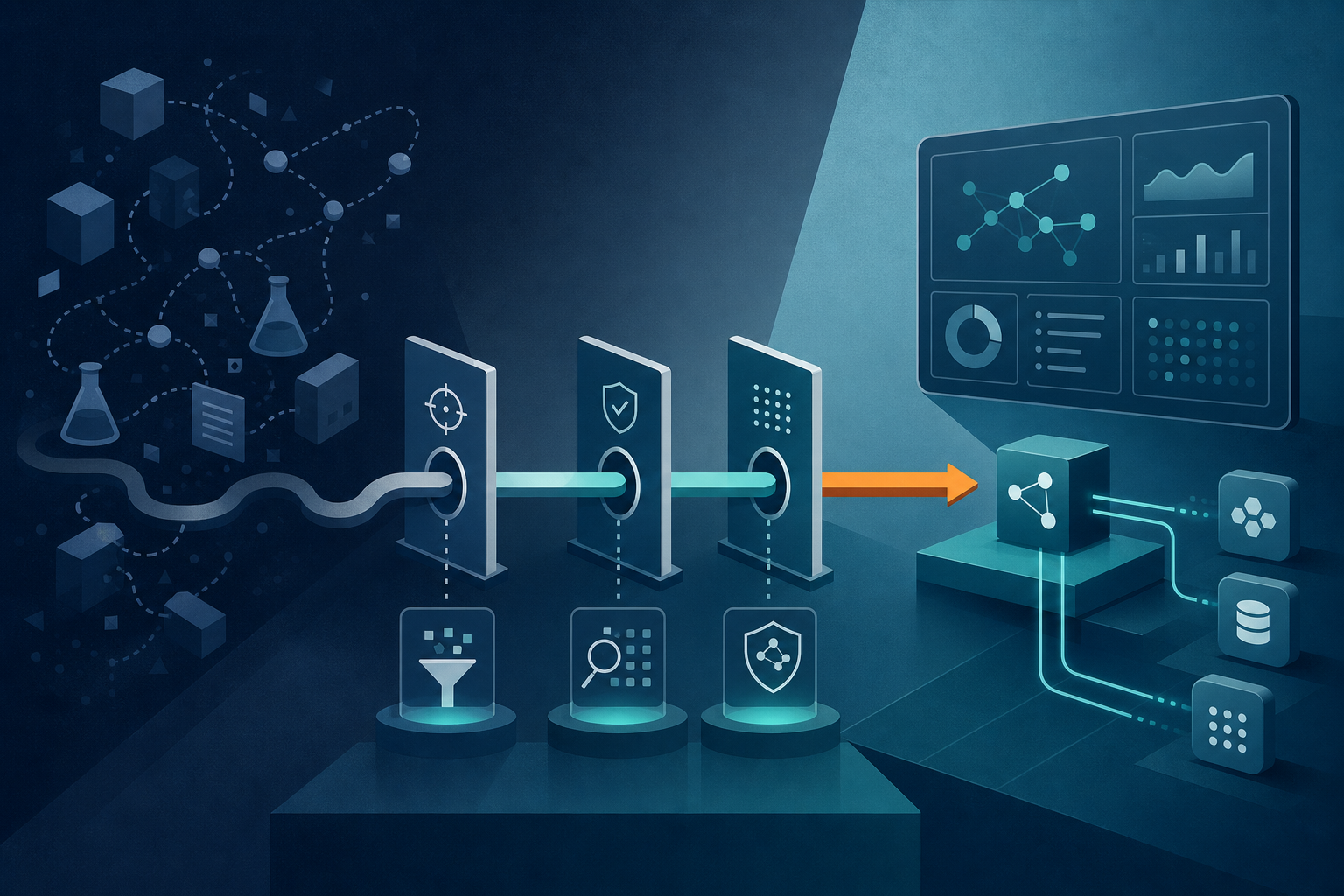
Production-ready isn't a bigger model or a fancier prompt. It's three specific things, decided before the build starts:
An evaluation harness and quality gates
How do you know the workflow is right, and how do you know when it starts drifting? If you can't answer that in one sentence, you don't have a production plan yet, you have a demo that hasn't failed publicly.
Defined data boundaries
What can the model see, what can it write to, and what happens if it tries to do something outside that boundary? This is where "excessive agency" and prompt injection stop being security-conference buzzwords and start being your actual attack surface.
A governance posture sized to your company
Frameworks like NIST AI RMF, ISO 42001, and the OWASP LLM Top 10 are useful references, but they're not a checklist you copy-paste from a Fortune 500 governance doc onto a 20-person startup. A right-sized governance posture for a Series B startup looks nothing like one for a regulated enterprise, and pretending otherwise is how governance becomes theater instead of protection.
Skip these three and you don't get a faster pilot. You get a pilot that works great until it doesn't, and then nobody can explain why, or fix it fast enough to matter.
The build mechanism: from validated use case to shipped workflow
Once a workflow is scoped and the guardrails are defined, the actual build is the Pilot-to-Production Build: six to ten weeks, milestone-based, taking a validated use case from prototype to a workflow that's actually running in production, not staged in a sandbox waiting for a green light that never comes.
SoloStream is the proof point here. One engineer, an AI co-pilot, about three months, and roughly 80% lower cost than a traditional build that would have run around $500,000. That's not a hypothetical efficiency gain. That's what a small, well-scoped team can ship when the plan targets production instead of a demo.
The pattern across PolicyFlow and SoloStream isn't "AI makes everything faster." It's narrower and more useful than that: a small team, with the right scope and the right guardrails, can ship a production workflow that would otherwise require a much bigger build-out, in a fraction of the time and cost. That's a specific, repeatable claim, not a hype-cycle promise.
And once workflow one ships, the real test starts. Shipping workflow one doesn't teach you workflow two, and plenty of teams find their second AI workflow drowning in review cycles that the first one never had. That's a good problem to have, but only if you planned for it.
Why CTOs and CISOs should care about week one, not launch week
If you're an enterprise VP Eng or CISO reading this, here's the part that actually changes whether a pilot gets turned on: security and governance need to be first-class decisions from week one, not a retrofit bolted on after the pilot proves it "works."
Prompt injection, data boundaries, excessive agency, these aren't a phase-two audit item. They're scoping decisions that determine whether the workflow can be trusted to run unattended, and whether leadership will actually flip the switch instead of leaving it in "successful pilot" purgatory forever. A workflow that works but that nobody's willing to turn on isn't shipped. It's just a very expensive demo.
This is also where mid-year is the right moment to look hard at what's already running. If you shipped a pilot earlier in the year, this is the point to check it for silent failures, cost overruns, and quality drift before they compound.
Where to start
If you've got a pilot that's stalled, or a pile of pilot ideas nobody's committed to, the fix isn't a bigger roadmap. It's a narrower one. The AI Opportunity & Readiness Sprint is built for exactly this: two weeks, fixed fee, ending with an executable plan for the one workflow worth shipping first.
Start at https://horizontwolabs.com.
Frequently asked
What is the PoC trap and why do AI pilots get stuck in it?
The PoC trap occurs when teams build AI pilots to prove AI works in general rather than shipping one specific workflow to production. Pilots get stuck because they lack evaluation harnesses to prove accuracy, defined data boundaries, governance frameworks, and clear ownership—all needed for production, not just demos.
How can teams escape the PoC trap and move pilots to production?
Teams must scope pilots for production from day one, not for demos. The key is picking one specific workflow rather than a portfolio, implementing an evaluation harness, defining data boundaries, and establishing governance frameworks before shipping—not after.
What did PolicyFlow do differently to ship in three months instead of twelve?
PolicyFlow targeted production from day one with a focused plan rather than building a demo intended for later production conversion. With one senior engineer plus an AI copilot, narrow scoping, evaluation harnesses, and right-sized governance enabled rapid shipping of the insurance data intake workflow.
Building AI into real operations is what we do.
Start a conversation