Shipping Workflow One Doesn't Teach You Workflow Two
Shipping one profitable AI workflow proves you can ship that workflow, not that you have a repeatable system. This piece breaks down why the mid-year urge to scale to three agents at once is more expensive than shipping zero, and what actually transfers between workflow one and workflow two: the evaluation harness, not the code.
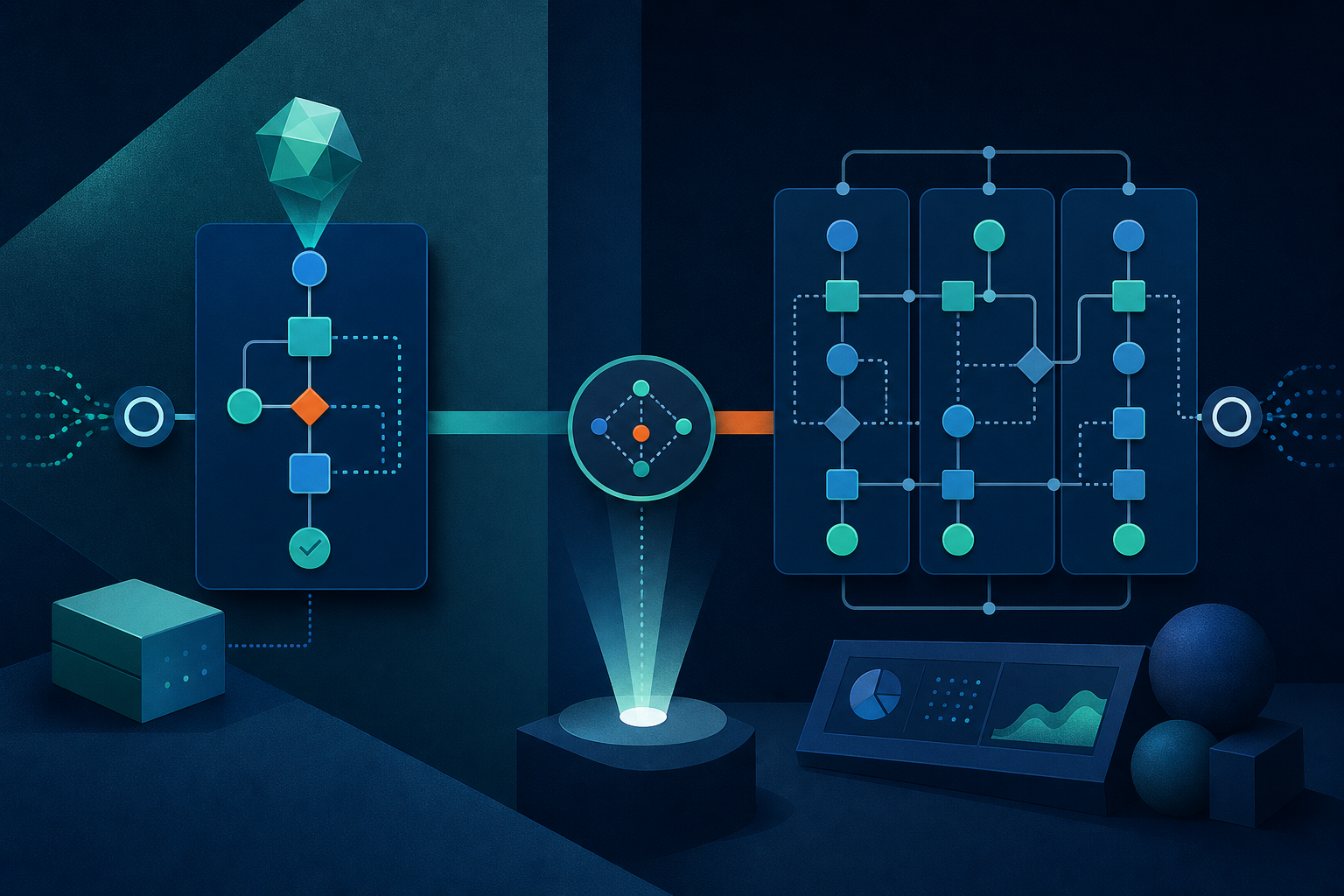
One senior engineer and an AI co-pilot shipped PolicyFlow in three months. Same scope of work would've taken a four-person team a year. That's a real result, and if you just landed something like it, you should feel good about it for exactly as long as it takes to read this post.
Because here's the trap: the win makes you feel like you've cracked the code. You haven't. You've cracked one workflow.
This is the moment a lot of teams are in right now. H1 is closed, workflow one is live, it's producing numbers, and someone in the room says "okay, what's next." That question is correct. The instinct that usually answers it isn't.
What actually worked, and why it doesn't travel
Workflow one worked because of things specific to workflow one: the shape of the data you were pulling from, who had to approve what and in which order, the particular ways it failed and how you caught those failures before they hit a customer. None of that is a platform. It's a solution to a problem you happened to have.
Teams treat "we shipped it" as proof they now have a repeatable system for shipping AI workflows. What they actually have is proof they can ship that workflow. Workflow two has a different data shape, a different approval chain, and failure modes you haven't met yet. The confidence transfers. The competence doesn't, not automatically.
The math on chasing three instead of shipping one
Here's where it gets expensive. The mid-year moment is exactly when the "let's ship three fast" instinct shows up, because you've got budget cleared, a team that just proved it can move, and pressure to show more wins before the next review. So instead of one focused build with a clear ROI target, you get three parallel agent projects that are all technically "live" and none of them load-bearing. Three half-working things that each need babysitting is a worse position than zero shipped, because now you're spending engineering time on maintenance instead of on the one build that might actually pay for itself.
PolicyFlow worked as one senior engineer plus a co-pilot on one clearly scoped problem. It did not work because Horizon Two Labs was running three of those at once hoping one would land.
What actually transfers: the eval harness, not the prompt
If not the playbook, then what's reusable between workflow one and workflow two? Not the code. Not the prompt templates, though people love to copy those over like they're the secret sauce. What travels is the evaluation harness: the quality gates you built to answer the question "is this agent actually doing its job, or does it just look like it is."
The harness that caught PolicyFlow's edge cases in insurance intake isn't the harness you need for a different workflow's edge cases. But the discipline of building one, the habit of defining what "correct" looks like before you ship, the monitoring that tells you when the model's drifted from that definition: that's the asset. That's the thing worth carrying forward. Everything else gets rebuilt.
Sometimes the right move isn't workflow two
The honest scoping answer, more often than teams want to hear, is that the next move isn't a second workflow at all. It's hardening the first one: tightening governance, building out monitoring, retraining the eval set as real production data comes in instead of the assumptions you shipped with. That's not a step back. That's the difference between a pilot that happened to land and a workflow that's actually load-bearing a year from now.
This is what the AI Enablement Retainer is built for: the ongoing iteration and governance work that keeps workflow one solid while you figure out, deliberately, whether workflow two is real. And when you're ready to actually pick workflow two, the AI Opportunity & Readiness Sprint is the on-ramp, not a second version of the enthusiasm that got workflow one built.
Before you greenlight workflow two
Run it through an AI Opportunity & Readiness Sprint: two weeks, fixed fee. At the end you'll know if it's a real second win, or just a faster way to burn the runway workflow one bought you.
Details at https://horizontwolabs.com.
Frequently asked
Why doesn't shipping one successful AI workflow mean you can ship a second one easily?
Workflow one's success came from specific conditions: its data shape, approval chain, and known failure modes. Workflow two has different data, different approval requirements, and new failure modes you haven't encountered. The confidence transfers, but the competence doesn't automatically.
What actually transfers between workflow one and workflow two?
The evaluation harness transfers between workflows, not the code itself. You've learned how to measure and catch failures, which applies broadly. But the specific implementation details are solution-specific, not platform-level.
Why is pursuing three workflows at once more expensive than shipping just one?
Chasing three workflows divides focus and budget across unfamiliar territory with untested failure modes. A single focused build with clear ROI is more efficient than spreading resources across multiple new problems simultaneously.
Building AI into real operations is what we do.
Start a conversation