Workflow One Taught You to Hire. Workflow Two Teaches You to Pay for It Twice.
Staffing a second AI workflow the way you staffed the first bakes in coordination overhead you can't easily unwind; this post uses the PolicyFlow build (one engineer, three months, versus a four-person year-long team) to show why the fix is workflow design, not headcount, and gives CTOs a judgment-gap-vs-throughput-gap diagnostic to run before budget season locks in the wrong org chart.
The PolicyFlow number nobody staffs for
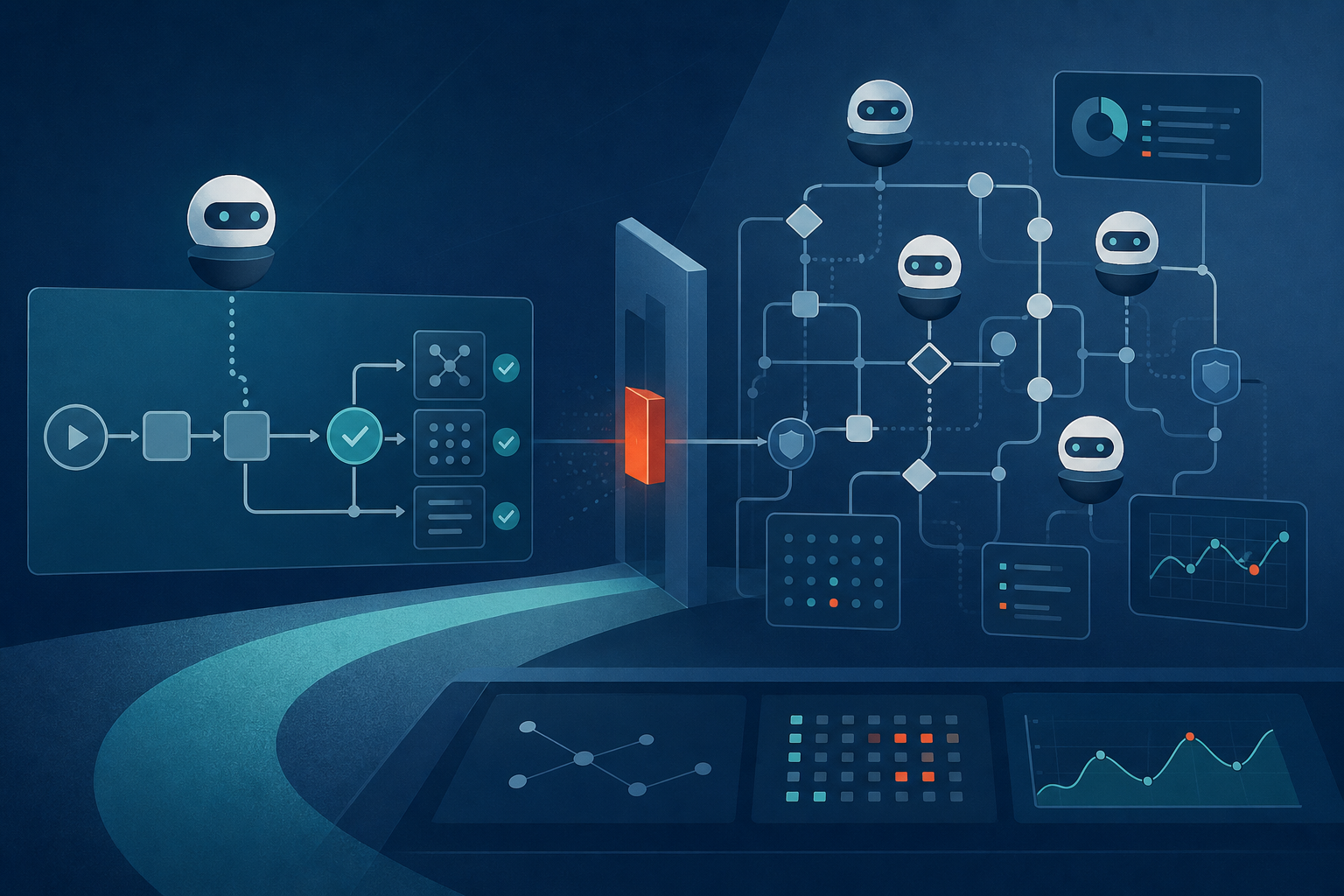
One senior engineer, paired with an AI co-pilot, shipped PolicyFlow (an AI-powered insurance data intake system) in three months. A conventional team of four would've needed twelve. That gap isn't a story about a talented engineer working nights. It's a story about workflow design eliminating the need for the coordination structure a four-person team requires in the first place: no hand-off from intake analyst to reviewer, no status meeting to sync progress, no queue sitting between two humans waiting on each other.
Most teams don't learn that lesson. They learn the opposite one. They staff workflow one by headcount, hire a prompt engineer, add an "AI lead," bring in a human reviewer to check outputs, and the moment it works, that org chart becomes the template. Workflow two gets staffed the same way, by default, whether or not it needs the same shape. That's the trap, and budget-planning season is exactly when it gets written into next year's plan as a permanent cost.
Why the first workflow's org chart becomes the default
Here's the mechanism. Workflow one ships. It works. Leadership asks: what do we need to repeat this? And the honest-but-lazy answer is "the same team, plus maybe one more person for the next thing." Nobody re-examines whether the review queue exists because the workflow genuinely needs human judgment at that step, or because that's just how the first build happened to get staffed under deadline pressure.
The coordination layers, hand-offs, review queues, status meetings, exist to manage people-shaped bottlenecks. A model doesn't need a stand-up. An eval gate doesn't need a status update. But once a team has hired humans into those roles, the roles generate their own justification: the reviewer needs someone to hand work to, the coordinator needs meetings to coordinate, and the org chart calcifies around a structure that was never actually required by the second workflow's logic.
This is the same failure mode covered in why headcount is the wrong lever for scaling AI, and it compounds with each new workflow you staff the same way.
The diagnostic: judgment gap or throughput gap
Before writing a requisition for workflow two, ask one question about every proposed hire: is this closing a judgment gap, or a throughput gap?
A judgment gap is real. Some decisions genuinely need a human: regulatory sign-off, a judgment call with legal exposure, a relationship-sensitive customer interaction. Staff for those.
A throughput gap is not a people problem. It's a pipeline problem. If work is piling up at a review step, the fix is usually a better-designed handoff, an evaluation gate that catches errors before a human ever sees them, or restructuring where the agent hands off to begin with. Hiring a second reviewer to clear the queue doesn't fix the pipeline, it just makes the queue move faster while staying exactly as unnecessary as before.
This distinction is also where NIST AI RMF-style governance thinking earns its keep, and it's worth reading alongside why compliance frameworks break on workflow two: the frameworks force you to name, explicitly, where a human decision is actually required. Most teams skip that step and hire instead.
Why unwinding the overhead is harder than avoiding it
Here's the blunt part. Once you've hired for coordination overhead, you can't un-hire your way out of it without it becoming a people problem, not a tooling problem. You can swap out the LLM, rebuild the pipeline, add an eval harness, all in a sprint. You cannot quietly restructure a role out of three people's jobs without it being a very different, much slower, much more political conversation than the one you'd have had by designing workflow one correctly from the start.
That's the actual cost of staffing-by-default: not the first wrong hire, but the fact that the first wrong hire makes the second one look normal, and the third one look required. Budget cycles lock this in. A headcount line that gets approved this year becomes the baseline assumption for every year after, whether or not the workflow it was built around still needs it.
For more on how this shows up as a replication problem rather than a staffing problem, see why AI wins don't replicate without documented decision logic: a lot of "we need more people for workflow two" is actually "we never wrote down why workflow one needed the people it had."
What to do instead, before the requisition gets written
The fix isn't a headcount audit after the fact. It's designing workflow one, and every workflow after it, around the actual bottleneck instead of the convenient org chart. That means scoping the judgment-vs-throughput question explicitly, before a single job req goes to finance, and it means doing it with enough rigor that the answer isn't just whoever argues loudest in the planning meeting.
This is precisely what the AI Opportunity & Readiness Sprint is built to force: two weeks, fixed fee, and you leave with the actual highest-leverage workflow design, not a headcount plan dressed up as a roadmap. It's the forcing function CTOs and VPs need right when next year's requisitions are being sized, because the question "do we need to hire for this" is a lot cheaper to answer in week two of a sprint than in month eight of an org chart you can't unwind.
Next step
If you're staffing workflow two the way you staffed workflow one, stop and run the diagnostic first: judgment gap or throughput gap. Then bring that question to an AI Opportunity & Readiness Sprint before the requisition gets written into next year's plan, not after.
Frequently asked
Why does scaling AI workflows require more headcount?
It usually doesn't, but it feels like it should because the first workflow's org chart (reviewer, prompt engineer, coordinator) becomes the default template. That structure was built to manage a specific bottleneck in workflow one. Workflow two likely has a different bottleneck, so copying the staffing pattern adds coordination overhead instead of fixing the actual gap.
How do I staff an AI team without overhiring?
Diagnose before you requisition. For each proposed hire, ask whether they're closing a judgment gap (a decision that genuinely needs a human) or a throughput gap (a pipeline that needs better design, an eval gate, or a cleaner agent handoff). Throughput gaps get solved with engineering, not headcount.
What is coordination overhead in AI workflows?
It's the hand-offs, review queues, and status meetings that exist to manage people-shaped bottlenecks, not model-shaped ones. PolicyFlow shipped with one senior engineer and an AI co-pilot in the time a 4-person team would've needed 12 months, partly because there was no coordination layer to maintain.
Building AI into real operations is what we do.
Start a conversation